September 11, 2001. New York City.
For Emily, the morning begins like thousands before it: the commute, the elevator, coffee, unfinished conversations, work waiting on the 103rd floor of the North Tower of the World Trade Center.
It is Tuesday. There is no reason to believe it will be anything other than ordinary.
Then, at 8:46 a.m., everything changes.
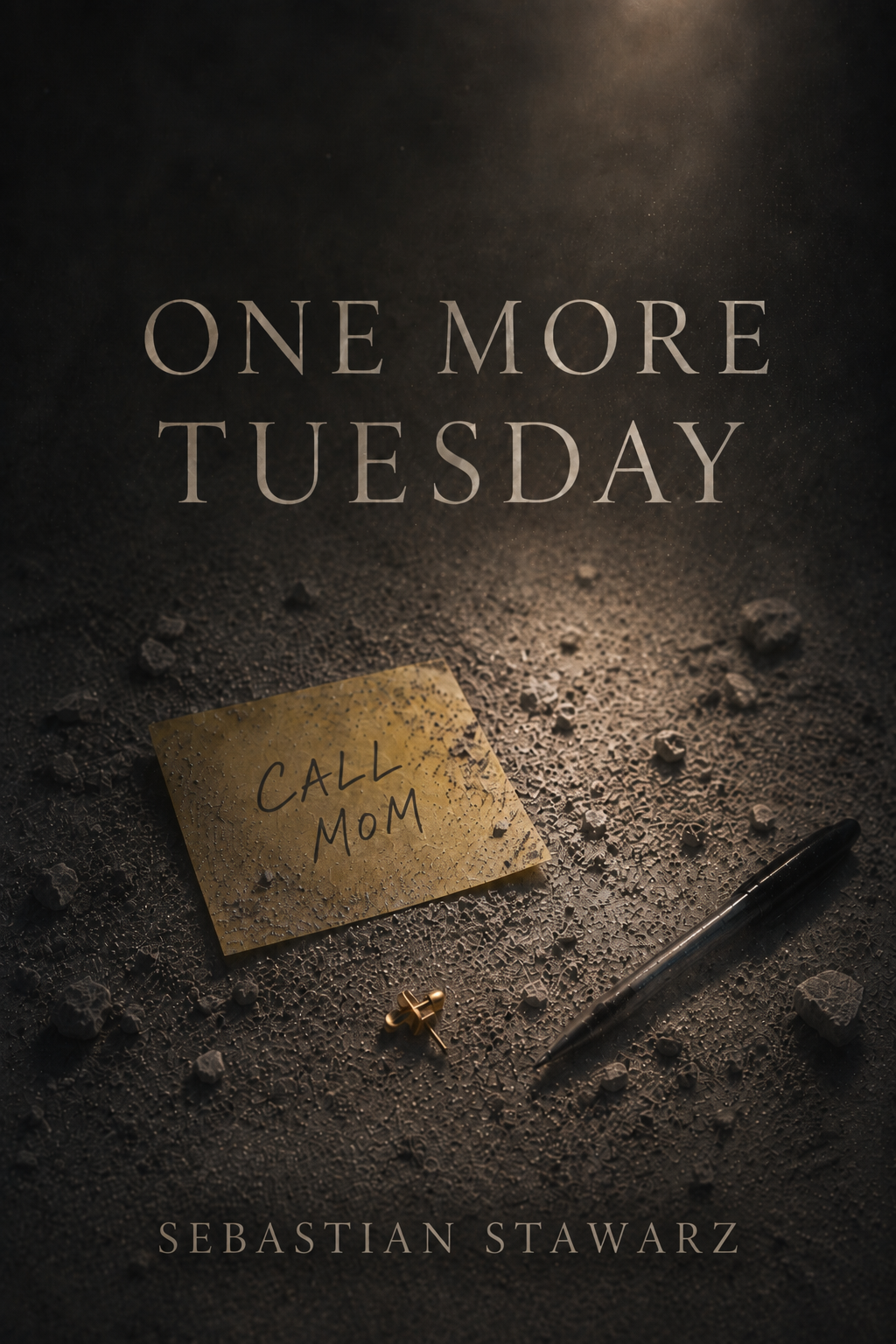
One More Tuesday follows Emily and the people around her through the final hour of the North Tower, from the first incomprehensible impact to the moment when the building itself becomes a race against time. Above the impact zone, escape routes have vanished. Information arrives slowly, rumours move faster than facts, telephones become lifelines, and every minute forces another impossible decision.
But this is not a story about statistics, architecture or the images that would later be repeated endlessly across television screens.
It is a story about people.
About unfinished conversations. About families waiting for another phone call. About colleagues who had known one another for years and strangers who suddenly become the most important people in the room. About memories that surface when the future becomes uncertain. And about the strange human instinct to continue doing ordinary things even when the world has stopped being ordinary.
Emily is not a soldier, a politician or a hero written for history books. She is simply a woman who went to work on a Tuesday morning.
Through her story, the novel moves minute by minute through one of the most documented events of modern history while remaining focused on what cannot be captured by timelines alone: fear, hope, disbelief, tenderness, confusion, and the desperate desire for just a little more time.
One More Tuesday is a work of historical fiction built around extensively researched events surrounding the World Trade Center on September 11. Fictional characters move through a carefully reconstructed historical setting, allowing the novel to explore not only what happened, but what it may have felt like to experience an ordinary morning becoming history.
Because history remembers dates.
People remember moments.